
Prof. Barnabas Nawangwe, the Vice Chancellor of Makerere University, has issued a directive to academic units to admit all qualifying PhD candidates, arguing that scaling up doctoral training is the only way to move the African continent out of poverty.
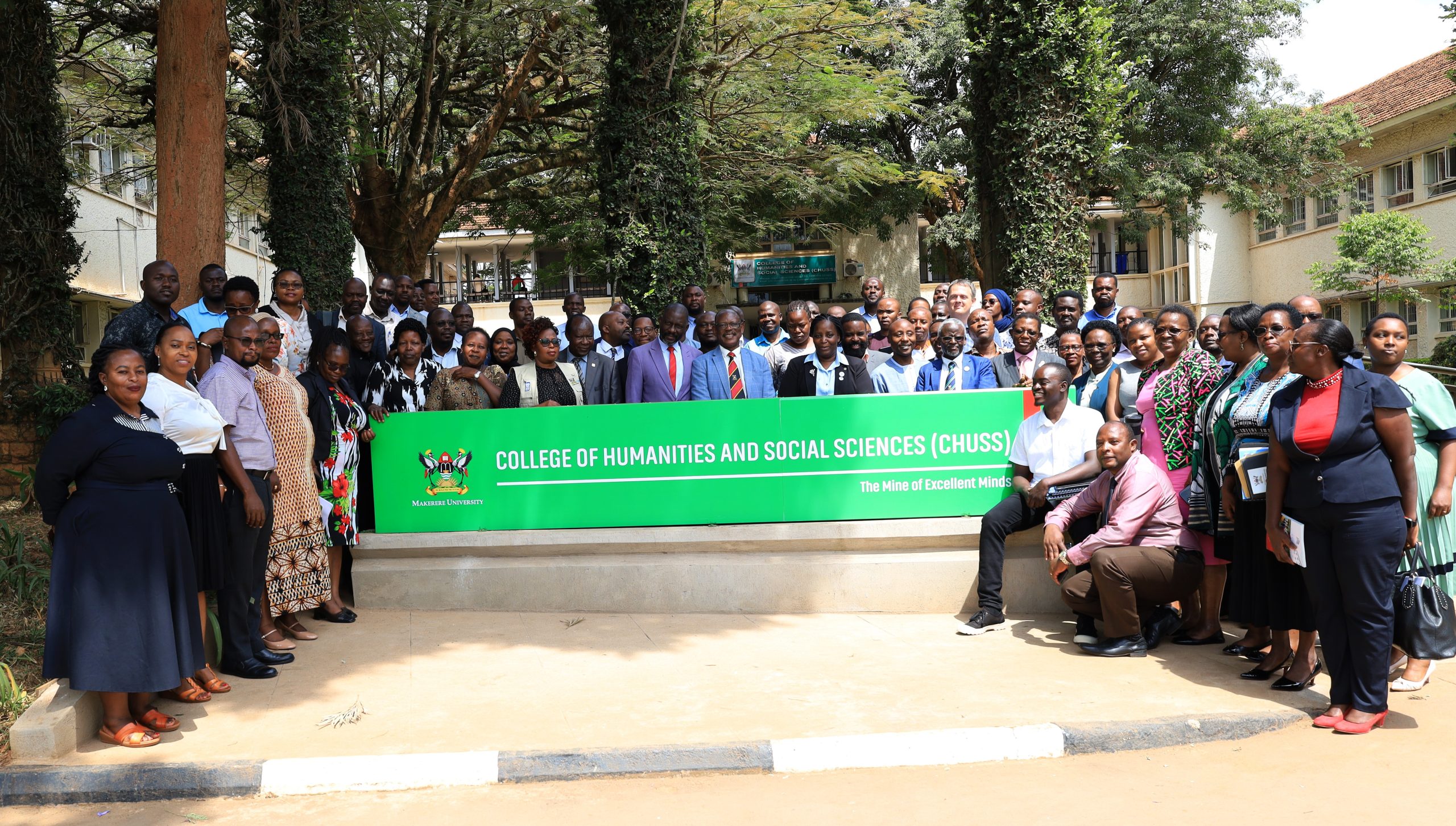
The Vice Chancellor and his delegation were on a tour to the College of Humanities and Social Sciences (CHUSS) to assess the status of graduate training and research. The Vice Chancellor was accompanied by the Academic Registrar Prof. Buyinza Mukadasi, Assoc. Prof. Julius Kikooma from the Directorate Graduate Research and Training, the representative of the Director of Quality Assurance, Coordinator Makerere University Grants Administration and Support Unit Prof. Antonia Nanyonga Nakimera Tamusuza, Prof. Robert Wamala from the Directorate of Research, Innovation and Partnerships, Coordinator Makerere University Writing Centre Prof. Fredrick Muyodi, Managing Editor Mak Press Assoc. Prof. William Tayeebwa and the Coordinator Makerere University Technology and Innovation Centre, Dr Margaret Nagwovuma, among others. Speaking to the leadership and staff of CHUSS, Prof. Nawangwe highlighted a gap in Africa’s human resource capacity, noting that while the World Bank estimates the continent needs one million PhDs in the next 10 years to transform its economy, the current output is insufficient; Africa currently produces fewer than 40,000 PhDs annually, far below the required 100,000 per year.
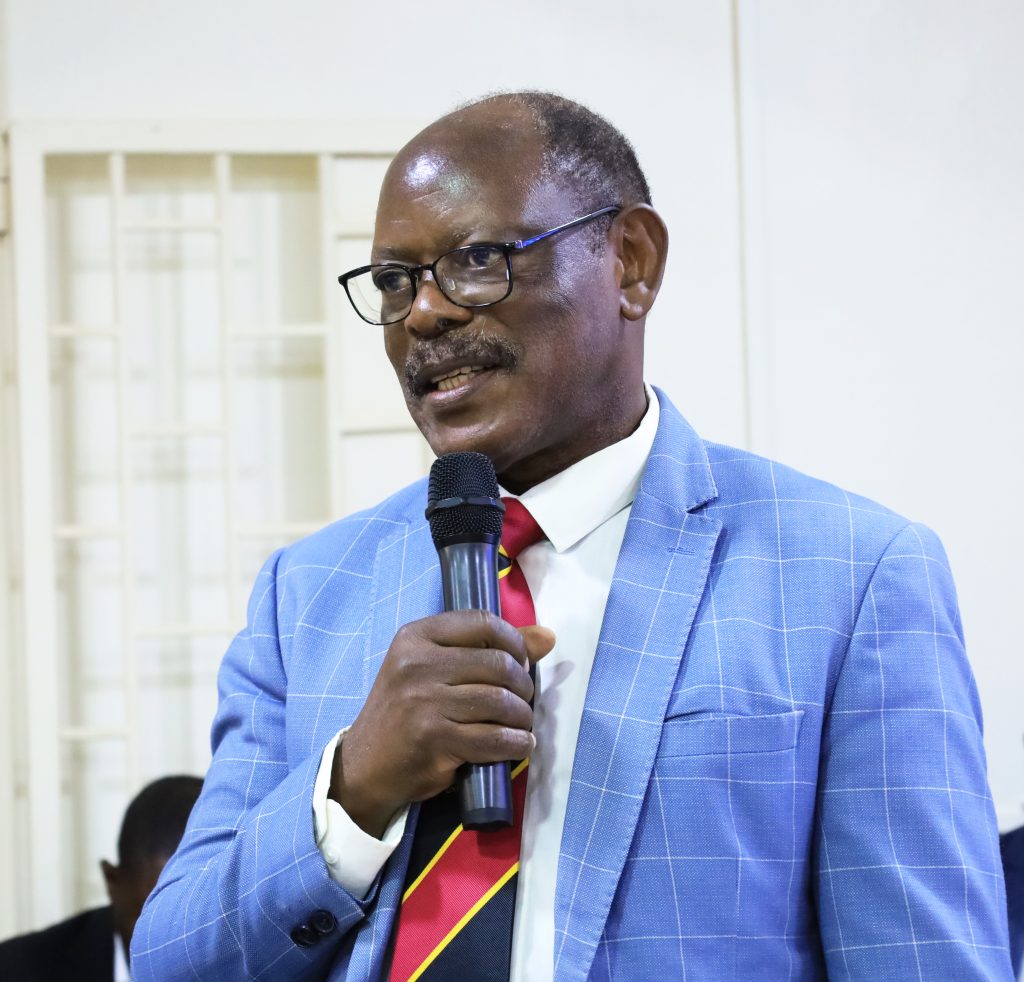
“Any PhD [candidate] you send away, you are doing a disservice to Africa,” Prof. Nawangwe stated, urging faculty not to turn away qualified applicants despite perceived constraints in staffing or space.
Nawangwe drew a contrast between Uganda’s research output and that of global leaders like South Korea. He noted that while Uganda currently has a total of approximately 2,500 PhDs, South Korea produces 12,900 PhDs every year and maintains a total pool of 650,000.
“South Korea produces four times more PhDs every year than we have as a total, as a country,” Nawangwe said, attributing South Korea’s rapid economic rise and innovation including its status as a top shipbuilder and oil exporter despite lacking domestic crude to its investment in high-level human capital.
Nawangwe recognized Makerere’s rising research profile despite historical challenges, noting that the university has emerged as a research powerhouse. The institution now brings in more than $250 million annually through research grants, surpassing the University of Cape Town in this metric.
Makerere University Press calls for establishment of departmental journals to boost local publishing
Andrew Mwesigwa, speaking for the Press on behalf of Assoc. Prof. William Tayeebwa, said most departments across the university already have the capacity to host credible academic journals but continue to rely heavily on external publications.
“Potentially, every department in CHUSS has a journal,” he said, urging faculties to build institutional publishing platforms.
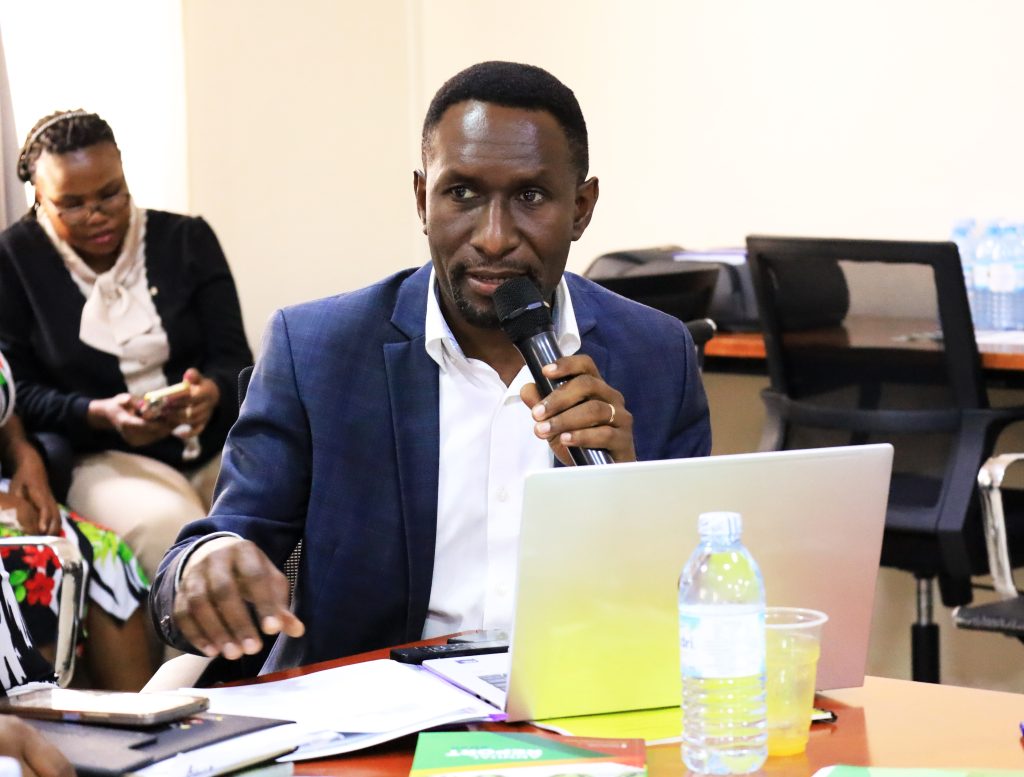
Andrew Mwesigwa, the representative from Makerere University Press presenting during the meeting
He noted that Makerere University Press now provides full publishing infrastructure, including ISSN registration, DOI assignment, and digital journal hosting systems to support indexing and global visibility.
Mwesigwa further encouraged departments to establish strong editorial boards and adopt consistent publication schedules, adding that sustained output is key to achieving international journal indexing standards.
Read the full article: https://chuss.mak.ac.ug/en/nawangwe-directs-chuss-units-to-admit-all-qualifying-phds/